
Poland has solidified its position as one of the premier business hubs in Central and Eastern Europe. A robust economy, a highly skilled workforce, and a strategic location make it an incredibly attractive destination for international enterprises looking to expand.
However, entering the Polish market comes with a unique set of challenges. Chief among them being the complexity of the local tax ecosystem.
For foreign investors, navigating the intricate web of Polish corporate tax, Value Added Tax (VAT), and highly digitized reporting structures requires careful preparation.
Achieving full compliance is not just about avoiding penalties; it is a fundamental prerequisite for building sustainable operations in the region.
1. Overview of the Polish Tax System for Foreign Investors
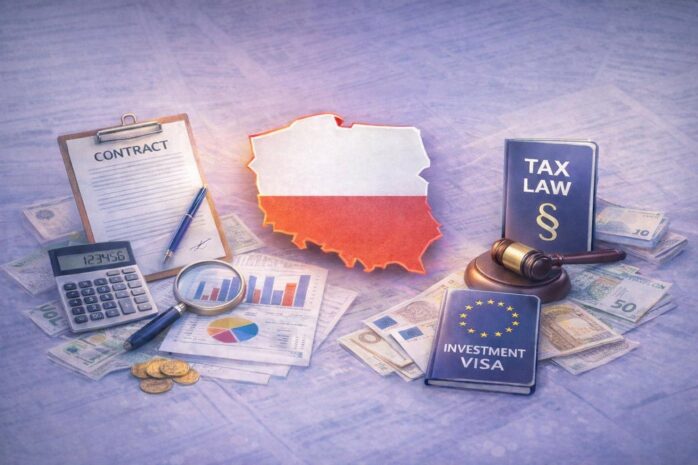
When structuring a business in Poland, foreign companies must familiarize themselves with several core tax pillars. The choices made during the initial setup significantly impact ongoing tax liabilities.
- Corporate Income Tax (CIT): The standard CIT rate in Poland is 19%. However, small taxpayers (companies with gross sales revenues below EUR 2 million in the previous tax year) and new business startups may qualify for a preferential 9% CIT rate on operational income, excluding capital gains.
- Transfer Pricing (TP) and WHT: International corporations frequently moving capital, royalties, or management fees between a Polish subsidiary and a foreign parent company face strict Transfer Pricing documentation requirements. Additionally, Poland applies rigorous Withholding Tax (WHT) collection mechanisms, utilizing a “pay-and-refund” system for payments exceeding certain thresholds.
Understanding these foundational tax structures ensures that your corporate framework is optimized from day one.
2. Navigating the Complexities of Polish VAT
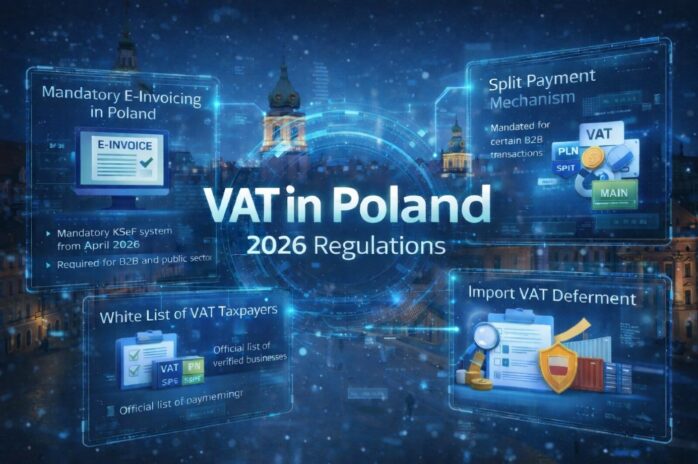
The Polish Value Added Tax system is widely regarded as one of the most strictly regulated in the European Union.
The Polish tax authority (National Revenue Administration) has spent the last decade implementing advanced digital tools to combat tax fraud and tighten the VAT gap.
Non-resident companies performing local supplies of goods, warehousing inventory in Poland (e.g., in e-commerce fulfillment centers), or importing goods into Polish territory are generally required to register for VAT purposes. Once registered, businesses must comply with several strict local mechanisms:
- The White List of Taxpayers: A public registry managed by the tax chief. Payments for invoices exceeding PLN 15,000 must be made exclusively to the bank accounts listed in this database, or the buyer risks losing the ability to deduct the expense.
- Split Payment Mechanism (MPP): For transactions involving specific “sensitive” goods and services (such as electronics, steel, or construction work) exceeding PLN 15,000, splitting the payment into a net amount (paid to the supplier) and a VAT amount (deposited into a restricted VAT account) is statutory and mandatory.
- SAF-T Reporting (JPK_V7): Polish VAT taxpayers do not file traditional, separate VAT returns. Instead, they submit a monthly comprehensive JPK_V7 file, which combines a standard tax return with a detailed, transaction-by-transaction accounting ledger.
3. Invoicing as a Core Compliance Pillar
In many jurisdictions, an invoice is viewed primarily as a commercial record of a sale. In Poland, however, a VAT invoice is a statutory tax document. Its layout, required wording, and timing are heavily regulated by the Polish VAT Act.
Any incomplete data or errors can instantly jeopardize a clients right to deduct input VAT, leading to strained commercial relationships, delayed payments, and severe tax audit exposure.
The operational reality for businesses in Poland has evolved dramatically. The country has successfully moved into a fully digital era with the mandatory rollout of the National e-Invoicing System (KSeF).
Traditional paper invoices and standard electronic formats, like unstructured PDFs sent via email, have been phased out for domestic B2B transactions.
Instead, companies must generate structured e-invoices in a highly specific XML format (aligned with the statutory FA(3) logical schema) and transmit them directly through the state-run KSeF platform.
The invoice is only considered legally issued once it has been validated and assigned an official identification number by the government system.
Beyond the technicalities of KSeF, the underlying legal requirements for invoice content remain as strict as ever.
Depending on the nature of the economic activity, invoices must feature exact, legally binding annotations.
For example, specific transactions require explicit wording like “reverse charge” (for cross-border services where the buyer accounts for VAT) or “mechanizm podzielonej płatności” (for split payment compliance).
Furthermore, strict legal deadlines dictate exactly when an invoice can be raised?typically by the 15th day of the month following the month of supply or receipt of an advance payment.
To ensure your financial operations remain fully compliant and to avoid costly administrative mistakes, it is crucial to understand the latest regulations regarding formatting, deadlines, and specific transaction legends.
For a comprehensive, step-by-step breakdown of these requirements, you can read this expert guide on the issuance of the invoices according to Polish tax law.
Summary: Securing Your Operations
Succeeding in the Polish market requires an approach that balances commercial ambition with rigorous compliance. With the tax environment becoming completely digital, international enterprises cannot afford a “wait-and-see” approach to accounting.
Partnering with established local tax advisors and specialized accounting experts is the safest way to ensure smooth integration with systems like KSeF, protect your business from fiscal penalties, and build a secure, long-term presence in Poland.