
Package selection becomes more useful when a Solana team can relate its budget to a current estimate instead of relying on a stale table. ChartUp addresses that problem with a dynamic calculator tied to the prevailing SOL price. For developers planning a private activity simulation, the feature provides a clearer starting point for comparing duration, allocation, and the liquidity venue being tested. It does not promise a fixed outcome, but it makes the planning conversation more concrete before an order begins.
The chartup sol volume bot presents the estimate inside its Telegram workflow, where a team chooses a package and a run length. Packages begin at 1.5 SOL and continue through 3, 4.5, 9, 12, 18, 36, and 54 SOL. Duration choices range from one hour to three or seven days. That combination lets a developer frame a short routing check very differently from an extended observation of analytics and token behavior.
Why DEX Fees Change the Projection
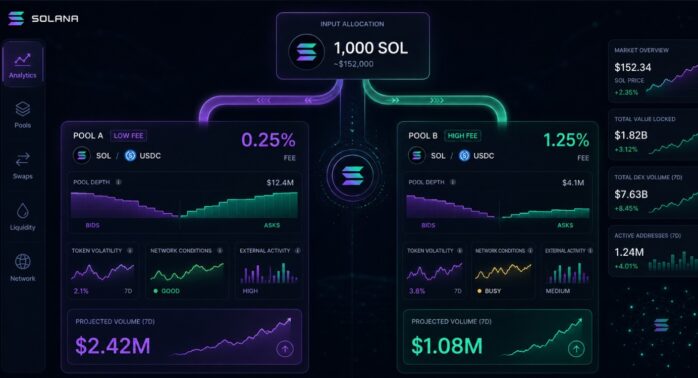
A calculator cannot remove the effect of a decentralized exchange. ChartUp bases package calculations on Raydium’s 0.25% swap fee, while a venue such as Pumpfun applies a higher 1.25% fee. The same SOL allocation can therefore produce a different estimated volume on different pools. Pool depth, token volatility, network conditions, and activity outside the test can change the recorded result as well. Treating the figure as a projection, rather than a guarantee, is the accurate approach.
Matching Execution Mode to the Estimate
The estimate is most valuable when paired with the platform’s execution choices. A Jito-oriented task can deliver fast feedback for a focused technical check, while organic mode varies transaction size and timing for a longer observation window. Both distribute activity across separate wallets. Choosing between them should follow the question being tested: immediate route validation and slower interface monitoring are not the same experiment, even when their starting budgets match.
Editing a Funded Task
ChartUp keeps the order adjustable after payment. Teams can pause or continue a task, revise swap speed, watch real-time statistics, and replace a contract address while retaining unused budget. If a token migrates to another pool, automatic detection can redirect activity rather than leaving the task attached to an obsolete venue. Those controls matter because an estimate made before a run may need to be interpreted alongside changes made during it.
Where the Calculator Applies
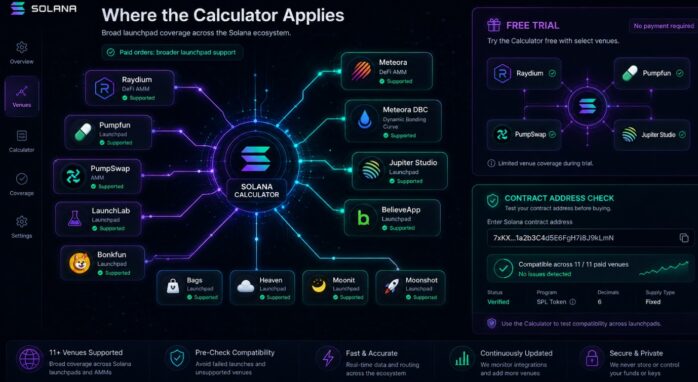
The supported Solana landscape includes Raydium, Pumpfun, PumpSwap, LaunchLab, Bonkfun, Meteora, Meteora DBC, Jupiter Studio, BelieveApp, Bags, Heaven, Moonit, and Moonshot, with other launchpads available for paid orders. The free trial covers a smaller set and requires no payment. Running that trial with a team’s own contract address is a sensible way to confirm the interface and venue compatibility before purchasing a non-refundable package.
Turning Live Stats Into a Test Record
Dynamic estimates also encourage better internal records. A developer can note the chosen SOL package, duration, DEX fee assumption, execution mode, and any speed or contract changes. Comparing those settings with the live statistics creates a reproducible test log instead of a single unexplained number. That discipline is especially useful when several engineers review the same token mechanics or when a later build needs to be compared with an earlier private run.
Verdict on Dynamic SOL Estimates
ChartUp’s calculator is therefore a planning aid, not a forecast of market response. The service is restricted to development, testing, and private simulations; it is not intended for public launches, investor-facing activity, or real-user deployments. Within that boundary, current SOL-based estimates, broad pool support, and editable execution give technical teams a practical framework for budgeting controlled Solana tests without presenting simulated transactions as genuine demand.