Home Blog

How AValidReview Turns Real Owner Feedback Into Practical 3D Printing Buying Guides

Buying a 3D printer can involve far more research than the typical product purchase. Two machines can advertise similar print speeds, resolutions and automated features yet produce very different experiences once they reach a workshop. Setup problems, firmware issues, material compatibility, reliability and customer support often matter as much as the specifications on the product page.

That is the problem AValidReview is trying to address. The specialized review site focuses on 3D printers, 3D scanners, printing pens, parts, accessories and supplies, with reviews built around experiences reported by people who actually own and use the products.

Rather than treating a single test unit as representative of every buyer’s experience, AValidReview looks for patterns across owner feedback. Its editorial process gathers reviews and discussions from online communities, identifies recurring praise and complaints, and then organizes those findings around areas such as setup, build quality, performance, software, reliability and value.

Looking Beyond the Specification Sheet
Product specifications are useful in 3D printing, but they tell only part of the story.

A scanner might claim extremely high accuracy, for example, while owners discover that achieving that accuracy requires extensive preparation, powerful hardware or a large number of tracking markers. A printer marketed as beginner-friendly might genuinely simplify setup while still creating problems when users encounter firmware updates, connectivity issues or their first failed print.

AValidReview’s approach is designed to capture these differences between advertised capabilities and everyday use.

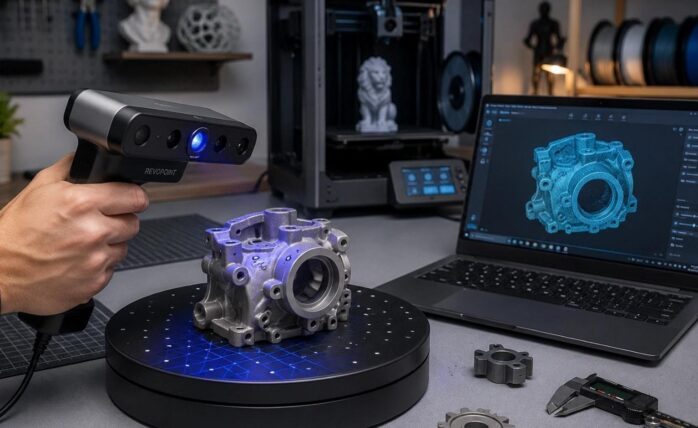
Its review of the Creality Raptor 3D Scanner, for example, discusses the scanner’s strong detail capture alongside reports of demanding hardware requirements, software stability problems and the amount of preparation required to obtain the best results. The article is based on feedback from 11 owners rather than presenting the manufacturer’s technical specifications as sufficient evidence of performance.

A review of the Geeetech Smart 3D Printer takes a similar approach. The machine receives praise for arriving assembled, producing solid prints and providing an accessible starting point for beginners. At the same time, owner experiences reveal issues involving connectivity, updates and occasional hardware problems. One of the more interesting conclusions from the review is that customer support itself becomes part of the product experience: several owners who experienced problems still reported positive outcomes because the company helped resolve them. The review discloses that its analysis is based on 12 owner reviews.

That kind of distinction is useful because purchasing decisions are rarely as simple as asking whether a product is “good.” A machine can be appropriate for a beginner and frustrating for an experienced maker. A scanner can produce excellent detail while requiring more preparation than a casual user is willing to tolerate.

Turning Scattered Opinions Into Usable Information

The internet already contains enormous amounts of product feedback. The difficulty is making sense of it.

Useful comments might be scattered across retailer reviews, forums and community discussions. Some owners write detailed reports after months of use, while others leave a star rating and a sentence. Individual experiences can also contradict one another.

AValidReview acts as an editorial layer over that material. Instead of expecting buyers to read large numbers of individual comments, the site looks for issues that appear repeatedly and turns those patterns into a structured review.

Its Creality CR-Scan Ferret Pro review, for example, separates manufacturer claims about portability, wireless connectivity and scanning accuracy from owner reports about difficulties tracking complex objects. The review explicitly states the number of owner experiences behind the analysis—in this case six—giving readers useful context about how much evidence sits behind the conclusions.

This disclosure is particularly valuable. An analysis based on six owners should naturally be interpreted differently from one supported by hundreds. Showing the underlying sample size gives readers information they can use when deciding how much weight to give a conclusion.

A Narrow Focus Helps

AValidReview currently concentrates specifically on 3D printing rather than trying to cover every consumer technology category. Its sections include FDM and resin printers, 3D printing pens, replacement parts and upgrades, filament and resin, and desktop and handheld 3D scanners.

That narrow scope fits the way the 3D printing market works. Products in this category frequently involve more interaction between hardware, software, materials and user skill than conventional consumer electronics.

A printer cannot be assessed solely by checking whether it powers on and completes a benchmark model. Long-term reliability, bed leveling, nozzle problems, firmware behavior, slicer compatibility and replacement parts can change how useful the machine becomes after several months.

Similarly, scanner performance can depend heavily on lighting, object geometry, surface material, computer hardware and software stability.

Aggregating experiences from different owners can therefore reveal problems or strengths that might never appear during a short review period.
Aggregated Reviews and Hands-On Testing Serve Different Purposes

AValidReview’s model should also be understood for what it is. The site’s reviews are editorial syntheses of owner experiences rather than conventional laboratory tests conducted entirely by a single reviewer. The site openly describes its articles as being based on experiences shared by owners in online communities.

The two approaches answer different questions.

A controlled hands-on test can measure a particular machine under known conditions. Aggregated owner feedback can expose patterns that develop across different machines, environments and longer periods of ownership.

For buyers, the most useful research may ultimately include both. Technical testing can show what a product is capable of, while owner experiences can show how consistently those capabilities survive contact with everyday use.

Keeping Reviews Current

Another challenge with 3D printing reviews is that the product being reviewed can change after publication. Firmware updates can fix bugs. Software can improve. Manufacturers can revise hardware or accessories. New competitors can also change what qualifies as good value.

AValidReview says its guides are revisited as firmware, materials and competing products evolve. Its stated editorial policy also says the underlying source material is analyzed before any commercial layer is applied and that sponsored placements do not determine its conclusions.

Maintaining that separation will matter as the site grows. Readers looking at aggregated reviews need confidence that recurring complaints remain visible even when the conclusions are commercially inconvenient.

A Useful Model for Research-Heavy Purchases

The central idea behind AValidReview is straightforward: instead of adding another individual opinion to the internet, make the existing opinions easier to understand.

That approach makes particular sense in 3D printing, where buyers often spend hours moving between product pages, Reddit threads, forums, YouTube videos and retailer reviews before making a decision.

AValidReview attempts to compress that research into an article that answers a more useful question than whether a reviewer liked a product: What do owners consistently experience after they actually start using it?

For a technology category where the difference between a great purchase and a frustrating one often appears only after the unboxing is finished, that is a question worth asking.


How AI Paraphrasing Tools Can Save You Hours on Emails, Essays, and Everyday Writing

AI chat interface on a computer screen, showing how an AI paraphrasing tool rewrites text

Most descriptions of a paraphrasing tool start with “make your text sound different.” That framing undersells the thing. The real payoff is time, and for once the productivity claims come with unusually concrete evidence behind them.

Knowledge workers spend roughly 28 percent of the workweek on email, an estimate that dates to McKinsey Global Institute’s research on the social economy and that no newer benchmark has displaced. Add essays, reports, replies, and the everyday messages nobody counts, and writing quietly becomes one of the largest line items on your week. AI paraphrasing tools attack that line item directly. Here is what the data says, where the hours actually leak, and which uses earn their keep.

Smartphone displaying an AI chatbot app for rewriting and paraphrasing everyday writing

Email is where the hours hide

Email eats more writing time than any other single activity. The 28 percent figure translates to more than eleven hours a week for the average interaction worker, and the heaviest users sit well above that. Those hours split unevenly. Drafting the first version is rarely the slow part. The slow part is the second version, the tone fix, the apology sentence that took four attempts, the reply you restarted because the first opener read as curt.

A paraphrasing tool collapses exactly those steps. You keep the facts and the structure you already settled on, and the tool regenerates the surface of the message: warmer, firmer, shorter, clearer. What took ten minutes of editing becomes a few seconds of scanning alternatives.

This is not a theory about what could happen. Microsoft ran a randomized field experiment with 66 firms and 7,137 knowledge workers, described in the paper Shifting Work Patterns with Generative AI. Half the workers were randomly given access to an AI writing assistant inside their existing office tools. In the second half of the six month trial, the treated workers who actually used it spent about two fewer hours a week on email, with no drop in the number of conversations they answered. A good share of the reclaimed time came back as longer unbroken focus blocks rather than more messages.

Hand holding a smartphone showing an email app, illustrating faster email writing with AI

What a government trial measured, task by task

The most useful breakdown comes from the UK Department for Work and Pensions, which ran a six month Copilot trial with 3,549 staff and published the evaluation in January 2026. The econometric analysis put average savings at 19 minutes per day across eight routine tasks. The writing tasks dominate the list.

Routine task Estimated time saved per day
Writing an email 25 minutes
Producing or editing written materials 20 minutes
Checking own writing for grammar, tone, or spelling 17 minutes
Summarising information or research 24 minutes

The figures come from the evaluation of DWP’s Microsoft 365 Copilot trial, published 29 January 2026. The design is not a randomized controlled trial: licences were partly self-selected and the data is self-reported, so treat the minutes as directional rather than precise. The pattern is still striking. Composing a single email saved more time per day than any other writing task in the study.

Here is why that matters for a standalone paraphrasing tool. Copilot bundles drafting, summarising, and rewriting into a paid workplace subscription. A dedicated paraphraser does one slice of that job for free and without an office rollout. The 25 minutes a day on email is not locked behind an enterprise license.

Essays: the honest use and the shortcut that backfires

Students have adopted these tools faster than almost anyone else. The Higher Education Policy Institute’s 2025 survey of full-time UK undergraduates found 92 percent now use AI in some form, up from 66 percent the year before, and 88 percent have used generative AI on assessed work, up from 53 percent. The HEPI Student Generative AI Survey 2025 reports the top reason plainly: it saves time. In the US, Copyleaks’ 2025 student survey found 39 percent already use AI specifically for paraphrasing or rewording.

The tension is real and the students themselves name it. A 2025 survey study in the Dialogue Social Science Review catalogued the challenges of university-level paraphrasing tools as over-reliance, loss of original meaning, and poor quality rewrites. Research on EFL thesis writers reached the same conclusion in softer language: tools work as a complement to writing skills, not a substitute. And an Inside Higher Ed survey run with Generation Lab found the minority of students who used AI to write full essays were roughly twice as likely to report it had hurt their critical thinking than those who used it to study.

My read is that the boundary is easy to state and hard to keep. Rephrasing your own draft, your own argument, your own summary of a source is legitimate drafting help. Pasting someone else’s passage and asking a tool to launder the wording is where the time saving turns into a different problem entirely. It skips the part of the task that was supposed to build skill, it produces prose that reads oddly, and it is the one behaviour institutions actively screen for. The tool is a writing aid, not an originality machine. Use it to say your own point better, never to disguise a point you did not make.

Everyday writing is where the tool quietly pays

Emails and essays get the attention. The unglamorous stuff out-earns them on volume: group chat replies, status updates, cover notes, product captions, the message to a landlord, the polite refusal, the review that took twenty minutes to write and still reads wrong.

These small texts share a pattern. The content is settled in your head in seconds. The words take ten times longer. A paraphraser closes that gap because you no longer have to find the phrasing from scratch. You rough out the meaning, hand it to the tool with a tone setting, and pick from versions that already sound finished.

That tone control is the most underrated feature in this category. The same three sentences can be made direct for a colleague, warm for a customer, or formal for a complaint. Most people are bad at switching registers on demand, especially at the end of a long day. The tool is not.

Writer taking notes beside a laptop and coffee, drafting everyday content with an AI writing assistant

A workflow that actually saves the hours

The tools do not save time by magic. They save time when you use them at the right point in the process, and they waste it when you do not. A few rules of thumb:

  • Draft ugly first. Get the facts and the point onto the page in whatever broken form comes out. Then run the cleanup pass with a paraphraser.
  • Rewrite the weak sentences, not the whole page. Pasting an entire finished document and regenerating it wholesale usually produces text that no longer sounds like you, and you will spend longer editing it back.
  • Match the tool to the audience. Tone modes exist for a reason. A single draft can be rephrased once for a client and once for an internal thread.
  • Use it to break a restart loop. When you are stuck on the same opener for the fifth time, feed the tool your stalled draft and let it offer a different entry point.
  • Read the result aloud before sending. Accept the suggestions that sound like you. Ship nothing unread.

For the times when a draft is nearly right and a few sentences still feel flat, a dedicated tool is faster than talking to a general chatbot. You can paste the passage into a free paraphraser and rephrase only the sentences that fail, compare a couple of versions side by side, and take the one that fits your voice.

Close-up of hands typing on a laptop, symbolizing the hours saved by AI paraphrasing tools

The bottom line

The hours are real before the tool arrives. Eleven of them vanish into email every week. Writing and editing tasks make up most of the measured daily savings in a government trial. Students cite time as their main reason for leaning on AI. None of that requires believing a marketing claim.

The discipline that keeps the savings honest is the same one that applies to any writing tool: keep your own point, keep your own voice, and treat the machine as the editor who never gets tired of the fifth draft. Do that, and the hours come back to you. Hand the whole job to the tool, and you lose the writing and the time both.

Method note: figures for email share of the workweek follow McKinsey Global Institute’s research as reported across 2025 and 2026 summaries. Trial numbers come from the DWP evaluation published 29 January 2026 and the field experiment paper revised 13 November 2025. Student usage figures come from HEPI’s February 2025 survey, Copyleaks’ September 2025 report, and the 2025 survey studies named above. The DWP trial used self-selected licences and self-reported data, so its minute estimates are directional. The McKinsey figure is a 2012 baseline that later studies have cited rather than replaced.

The Rise and Fall of Tom Goodhead and the Law Firm Built on Mass Legal Claims

Source: nonbillable.co.uk

Tom Goodhead helped transform Pogust Goodhead from a specialist litigation practice into a firm associated with some of the largest group claims in the English courts. Its rapid expansion was built around representing thousands of individuals in environmental, consumer and vehicle emissions cases. However, Goodhead’s removal from leadership, growing financial pressure and the departure of senior lawyers have changed the story from ambitious growth to a struggle for stability.

Rapid Expansion and Early Financial Warning Signs

Source: lawgazette.co.uk

The going-concern warnings about Pogust Goodhead revealed the financial risks behind the firm’s aggressive expansion. Auditors raised questions about whether the business could continue meeting its obligations without obtaining additional funding. These warnings did not mean that the firm was certain to fail, but they indicated material uncertainty surrounding its financial position.

Pogust Goodhead’s business model depended on investing large amounts of money in legal claims before receiving fees. This approach can produce substantial returns when cases succeed, but proceedings may take many years to reach a final judgment or settlement. During that period, the firm must continue paying lawyers, experts, technology providers and administrative teams responsible for communicating with large groups of claimants.

Goodhead compared the firm’s rapid development to the growth of a technology start-up. The strategy allowed Pogust Goodhead to pursue cases beyond the financial capacity of many traditional law firms. At the same time, it increased the firm’s dependence on borrowing and external litigation finance.

The Mariana Case Transformed the Firm

Pogust Goodhead became internationally recognised through its claim against BHP concerning the 2015 Mariana dam disaster in Brazil. The collapse released mining waste across a large area, caused extensive environmental damage and affected numerous communities. The English proceedings were brought on behalf of hundreds of thousands of claimants seeking compensation.

The scale of the case required extraordinary financial resources. Pogust Goodhead relied heavily on funding supplied by Gramercy Funds Management, creating a relationship that became central to the firm’s survival. As borrowing and legal costs increased, concerns developed about the amount of influence a financial backer could exercise over management decisions.

The firm achieved an important victory when the English High Court found BHP liable. However, establishing liability did not immediately generate compensation or legal fees. Further proceedings are required to determine causation, individual losses and damages, leaving the firm responsible for financing another lengthy and expensive phase.

Goodhead’s Removal and the Search for Stability

Tom Goodhead was abruptly replaced as chief executive in 2025 and was later removed as a director. Reports connected the leadership change to disagreements over expenditure, governance and the management of the firm. Goodhead denied misconduct and argued that his removal resulted from a dispute over control and the direction of major cases.

Several senior lawyers also departed, including partners involved in the BHP and vehicle emissions claims. Their exits increased uncertainty about the firm’s internal stability and its ability to retain experienced legal teams. Pogust Goodhead has denied that its professional independence has been compromised and says its lawyers remain responsible for legal strategy.

A new leadership structure has since been introduced. Quinn Emanuel has also joined the Mariana litigation through a strategic partnership, supported by additional case-specific funding. These steps are intended to provide resources and expertise for the damages phase.

Conclusion

Tom Goodhead’s rise was closely connected to an ambitious model for financing mass legal claims, while his fall exposed the weaknesses of that same strategy. Pogust Goodhead proved that a specialist firm could challenge powerful multinational defendants, but rapid expansion created substantial debt and governance risks. Its future will depend on stable leadership, responsible funding and its ability to protect clients while navigating years of further litigation.

ChartUp Sol Volume Bot: Dynamic SOL Volume Estimates

Package selection becomes more useful when a Solana team can relate its budget to a current estimate instead of relying on a stale table. ChartUp addresses that problem with a dynamic calculator tied to the prevailing SOL price. For developers planning a private activity simulation, the feature provides a clearer starting point for comparing duration, allocation, and the liquidity venue being tested. It does not promise a fixed outcome, but it makes the planning conversation more concrete before an order begins.

The chartup sol volume bot presents the estimate inside its Telegram workflow, where a team chooses a package and a run length. Packages begin at 1.5 SOL and continue through 3, 4.5, 9, 12, 18, 36, and 54 SOL. Duration choices range from one hour to three or seven days. That combination lets a developer frame a short routing check very differently from an extended observation of analytics and token behavior.

Why DEX Fees Change the Projection

A calculator cannot remove the effect of a decentralized exchange. ChartUp bases package calculations on Raydium’s 0.25% swap fee, while a venue such as Pumpfun applies a higher 1.25% fee. The same SOL allocation can therefore produce a different estimated volume on different pools. Pool depth, token volatility, network conditions, and activity outside the test can change the recorded result as well. Treating the figure as a projection, rather than a guarantee, is the accurate approach.

Matching Execution Mode to the Estimate

The estimate is most valuable when paired with the platform’s execution choices. A Jito-oriented task can deliver fast feedback for a focused technical check, while organic mode varies transaction size and timing for a longer observation window. Both distribute activity across separate wallets. Choosing between them should follow the question being tested: immediate route validation and slower interface monitoring are not the same experiment, even when their starting budgets match.

Editing a Funded Task

ChartUp keeps the order adjustable after payment. Teams can pause or continue a task, revise swap speed, watch real-time statistics, and replace a contract address while retaining unused budget. If a token migrates to another pool, automatic detection can redirect activity rather than leaving the task attached to an obsolete venue. Those controls matter because an estimate made before a run may need to be interpreted alongside changes made during it.

Where the Calculator Applies

The supported Solana landscape includes Raydium, Pumpfun, PumpSwap, LaunchLab, Bonkfun, Meteora, Meteora DBC, Jupiter Studio, BelieveApp, Bags, Heaven, Moonit, and Moonshot, with other launchpads available for paid orders. The free trial covers a smaller set and requires no payment. Running that trial with a team’s own contract address is a sensible way to confirm the interface and venue compatibility before purchasing a non-refundable package.

Turning Live Stats Into a Test Record

Dynamic estimates also encourage better internal records. A developer can note the chosen SOL package, duration, DEX fee assumption, execution mode, and any speed or contract changes. Comparing those settings with the live statistics creates a reproducible test log instead of a single unexplained number. That discipline is especially useful when several engineers review the same token mechanics or when a later build needs to be compared with an earlier private run.

Verdict on Dynamic SOL Estimates

ChartUp’s calculator is therefore a planning aid, not a forecast of market response. The service is restricted to development, testing, and private simulations; it is not intended for public launches, investor-facing activity, or real-user deployments. Within that boundary, current SOL-based estimates, broad pool support, and editable execution give technical teams a practical framework for budgeting controlled Solana tests without presenting simulated transactions as genuine demand.

Dexlift BSC Volume Bot for Consistent Development Runs

Dexlift BNB Volume Bot

Regression testing on BNB Smart Chain becomes difficult when every run is assembled from unrelated manual swaps. After a contract or interface change, developers need a new activity window that can be compared with the earlier one. The boundaries should be consistent even though the individual transactions do not need to look mechanically identical.

Repeatability Without Artificial Uniformity

The BSC Volume Bot provides that balance through defined durations and two clearly different execution modes. A team can repeat the same testing objective after a release, retain the relevant package and mode, and still expose its system to changing timing, values, and wallet sources within the run.

Dexlift balances those requirements by keeping the run boundaries clear while varying the events inside them. A team can use the same duration and mode after an application update, then compare how the product responded without relying on a perfectly mechanical transaction loop.

Integrated Platforms and DEXes

The Core BSC Operation

Automated buy and sell cycles are distributed across unique, unlinked wallets. Transaction amounts shift and timing varies, giving BSC contracts, pools and analytics layers a broader activity pattern to process. Durations range from one hour to seven days, covering quick regression checks as well as sustained observation.

The interface runs through Telegram. Dexlift does not require a connected project wallet, private key or seed phrase. Payment goes to a one-time blockchain address, reducing setup friction and keeping sensitive credentials outside the platform. For a team repeating tests throughout development, that operational simplicity matters.

Two Modes Create Two Useful Baselines

Fast mode creates concentrated activity and is suited to functional comparisons. A team can run it after changing a DEX route or dashboard component to confirm that transactions still execute and appear correctly. Its compressed pace helps engineers identify obvious failures quickly.

Organic mode introduces changing delays and trade values. It is the more useful baseline when the team wants to compare tokenomics behavior, indexer response or time-based metrics across versions. The variation is intentional, while the selected duration and purpose remain controlled.

Teams should preserve which mode they used. Comparing an organic seven-day run with a one-hour fast pass may be interesting, but it is not a direct before-and-after test.

Practical Development Value

Token engineers can compare contract behavior before and after adjusting supply mechanics. DEX teams can retest an interface when they change event parsing or aggregation. Analytics developers can observe whether a new indexing release reduces delay or creates discrepancies. Operations teams can repeat an activity window while refining alert thresholds.

The Dexlift free trial includes covered trading fees and provides a sensible first baseline. Teams can inspect the Telegram workflow and transaction output before selecting a larger package.

Complementary Products

Makers Booster focuses on maker activity through independent-wallet micro-transactions. Holders Booster supports controlled tests of wallet distribution. Bump Bots automate microbuys on supported BSC launchpads during development periods. These focused products help teams repeat tests for individual metrics rather than forcing all evaluation through trading volume.

Responsible Use and Verdict

Repeated simulation is still simulation. Dexlift intends the bot for controlled development, not for portraying manufactured activity as real demand on a live public project. Operators retain responsibility for configuration and lawful use.

Dexlift gives BSC teams a repeatable framework without reducing testing to one cloned transaction. Chain-aware execution, unlinked wallets, fast validation, organic observation, and selectable durations support meaningful comparisons across releases. For developers who improve a product through repeated measurement, that structure is more valuable than a headline transaction count.

Doing Business in Poland: A Comprehensive Guide to Local Tax Regulations and Invoicing Compliance

Poland has solidified its position as one of the premier business hubs in Central and Eastern Europe. A robust economy, a highly skilled workforce, and a strategic location make it an incredibly attractive destination for international enterprises looking to expand.

However, entering the Polish market comes with a unique set of challenges. Chief among them being the complexity of the local tax ecosystem.

For foreign investors, navigating the intricate web of Polish corporate tax, Value Added Tax (VAT), and highly digitized reporting structures requires careful preparation.

Achieving full compliance is not just about avoiding penalties; it is a fundamental prerequisite for building sustainable operations in the region.

1. Overview of the Polish Tax System for Foreign Investors

Source: polishtax.com

When structuring a business in Poland, foreign companies must familiarize themselves with several core tax pillars. The choices made during the initial setup significantly impact ongoing tax liabilities.

  • Corporate Income Tax (CIT): The standard CIT rate in Poland is 19%. However, small taxpayers (companies with gross sales revenues below EUR 2 million in the previous tax year) and new business startups may qualify for a preferential 9% CIT rate on operational income, excluding capital gains.
  • Transfer Pricing (TP) and WHT: International corporations frequently moving capital, royalties, or management fees between a Polish subsidiary and a foreign parent company face strict Transfer Pricing documentation requirements. Additionally, Poland applies rigorous Withholding Tax (WHT) collection mechanisms, utilizing a “pay-and-refund” system for payments exceeding certain thresholds.

Understanding these foundational tax structures ensures that your corporate framework is optimized from day one.

2. Navigating the Complexities of Polish VAT

Source: polishtax.com

The Polish Value Added Tax system is widely regarded as one of the most strictly regulated in the European Union.

The Polish tax authority (National Revenue Administration) has spent the last decade implementing advanced digital tools to combat tax fraud and tighten the VAT gap.

Non-resident companies performing local supplies of goods, warehousing inventory in Poland (e.g., in e-commerce fulfillment centers), or importing goods into Polish territory are generally required to register for VAT purposes. Once registered, businesses must comply with several strict local mechanisms:

  • The White List of Taxpayers: A public registry managed by the tax chief. Payments for invoices exceeding PLN 15,000 must be made exclusively to the bank accounts listed in this database, or the buyer risks losing the ability to deduct the expense.
  • Split Payment Mechanism (MPP): For transactions involving specific “sensitive” goods and services (such as electronics, steel, or construction work) exceeding PLN 15,000, splitting the payment into a net amount (paid to the supplier) and a VAT amount (deposited into a restricted VAT account) is statutory and mandatory.
  • SAF-T Reporting (JPK_V7): Polish VAT taxpayers do not file traditional, separate VAT returns. Instead, they submit a monthly comprehensive JPK_V7 file, which combines a standard tax return with a detailed, transaction-by-transaction accounting ledger.

3. Invoicing as a Core Compliance Pillar

Source: euronews.com

In many jurisdictions, an invoice is viewed primarily as a commercial record of a sale. In Poland, however, a VAT invoice is a statutory tax document. Its layout, required wording, and timing are heavily regulated by the Polish VAT Act.

Any incomplete data or errors can instantly jeopardize a clients right to deduct input VAT, leading to strained commercial relationships, delayed payments, and severe tax audit exposure.

The operational reality for businesses in Poland has evolved dramatically. The country has successfully moved into a fully digital era with the mandatory rollout of the National e-Invoicing System (KSeF).

Traditional paper invoices and standard electronic formats, like unstructured PDFs sent via email, have been phased out for domestic B2B transactions.

Instead, companies must generate structured e-invoices in a highly specific XML format (aligned with the statutory FA(3) logical schema) and transmit them directly through the state-run KSeF platform.

The invoice is only considered legally issued once it has been validated and assigned an official identification number by the government system.

Beyond the technicalities of KSeF, the underlying legal requirements for invoice content remain as strict as ever.

Depending on the nature of the economic activity, invoices must feature exact, legally binding annotations.

For example, specific transactions require explicit wording like “reverse charge” (for cross-border services where the buyer accounts for VAT) or “mechanizm podzielonej płatności” (for split payment compliance).

Furthermore, strict legal deadlines dictate exactly when an invoice can be raised?typically by the 15th day of the month following the month of supply or receipt of an advance payment.

To ensure your financial operations remain fully compliant and to avoid costly administrative mistakes, it is crucial to understand the latest regulations regarding formatting, deadlines, and specific transaction legends.

For a comprehensive, step-by-step breakdown of these requirements, you can read this expert guide on the issuance of the invoices according to Polish tax law.

Summary: Securing Your Operations

Source: optilingo.com

Succeeding in the Polish market requires an approach that balances commercial ambition with rigorous compliance. With the tax environment becoming completely digital, international enterprises cannot afford a “wait-and-see” approach to accounting.

Partnering with established local tax advisors and specialized accounting experts is the safest way to ensure smooth integration with systems like KSeF, protect your business from fiscal penalties, and build a secure, long-term presence in Poland.

MUST READ