
Buying a 3D printer can involve far more research than the typical product purchase. Two machines can advertise similar print speeds, resolutions and automated features yet produce very different experiences once they reach a workshop. Setup problems, firmware issues, material compatibility, reliability and customer support often matter as much as the specifications on the product page.
That is the problem AValidReview is trying to address. The specialized review site focuses on 3D printers, 3D scanners, printing pens, parts, accessories and supplies, with reviews built around experiences reported by people who actually own and use the products.
Rather than treating a single test unit as representative of every buyer’s experience, AValidReview looks for patterns across owner feedback. Its editorial process gathers reviews and discussions from online communities, identifies recurring praise and complaints, and then organizes those findings around areas such as setup, build quality, performance, software, reliability and value.
Looking Beyond the Specification Sheet
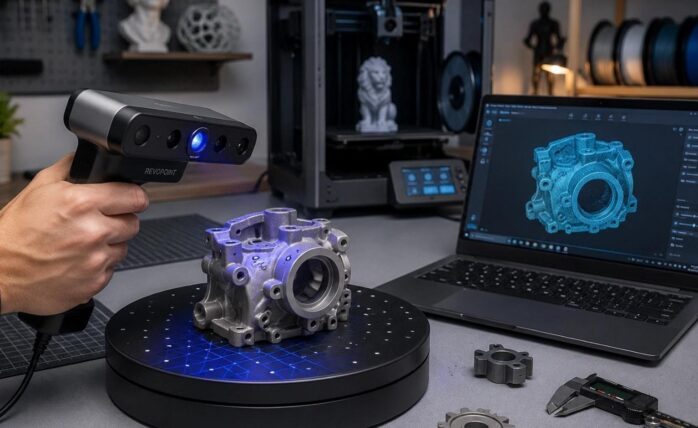
Product specifications are useful in 3D printing, but they tell only part of the story.
A scanner might claim extremely high accuracy, for example, while owners discover that achieving that accuracy requires extensive preparation, powerful hardware or a large number of tracking markers. A printer marketed as beginner-friendly might genuinely simplify setup while still creating problems when users encounter firmware updates, connectivity issues or their first failed print.
AValidReview’s approach is designed to capture these differences between advertised capabilities and everyday use.
Its review of the Creality Raptor 3D Scanner, for example, discusses the scanner’s strong detail capture alongside reports of demanding hardware requirements, software stability problems and the amount of preparation required to obtain the best results. The article is based on feedback from 11 owners rather than presenting the manufacturer’s technical specifications as sufficient evidence of performance.
A review of the Geeetech Smart 3D Printer takes a similar approach. The machine receives praise for arriving assembled, producing solid prints and providing an accessible starting point for beginners. At the same time, owner experiences reveal issues involving connectivity, updates and occasional hardware problems. One of the more interesting conclusions from the review is that customer support itself becomes part of the product experience: several owners who experienced problems still reported positive outcomes because the company helped resolve them. The review discloses that its analysis is based on 12 owner reviews.
That kind of distinction is useful because purchasing decisions are rarely as simple as asking whether a product is “good.” A machine can be appropriate for a beginner and frustrating for an experienced maker. A scanner can produce excellent detail while requiring more preparation than a casual user is willing to tolerate.
Turning Scattered Opinions Into Usable Information
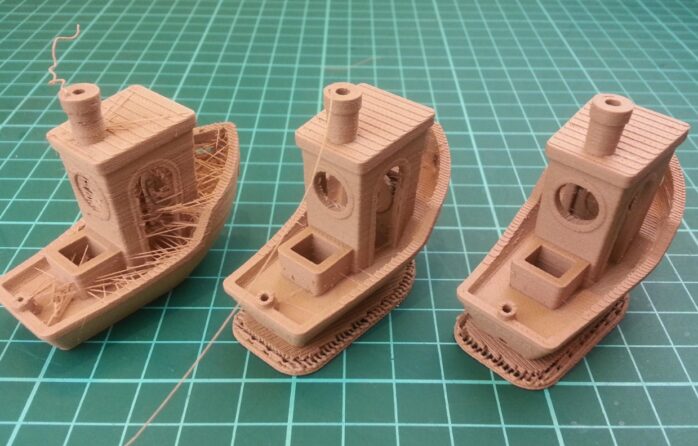
The internet already contains enormous amounts of product feedback. The difficulty is making sense of it.
Useful comments might be scattered across retailer reviews, forums and community discussions. Some owners write detailed reports after months of use, while others leave a star rating and a sentence. Individual experiences can also contradict one another.
AValidReview acts as an editorial layer over that material. Instead of expecting buyers to read large numbers of individual comments, the site looks for issues that appear repeatedly and turns those patterns into a structured review.
Its Creality CR-Scan Ferret Pro review, for example, separates manufacturer claims about portability, wireless connectivity and scanning accuracy from owner reports about difficulties tracking complex objects. The review explicitly states the number of owner experiences behind the analysis—in this case six—giving readers useful context about how much evidence sits behind the conclusions.
This disclosure is particularly valuable. An analysis based on six owners should naturally be interpreted differently from one supported by hundreds. Showing the underlying sample size gives readers information they can use when deciding how much weight to give a conclusion.
A Narrow Focus Helps
AValidReview currently concentrates specifically on 3D printing rather than trying to cover every consumer technology category. Its sections include FDM and resin printers, 3D printing pens, replacement parts and upgrades, filament and resin, and desktop and handheld 3D scanners.
That narrow scope fits the way the 3D printing market works. Products in this category frequently involve more interaction between hardware, software, materials and user skill than conventional consumer electronics.
A printer cannot be assessed solely by checking whether it powers on and completes a benchmark model. Long-term reliability, bed leveling, nozzle problems, firmware behavior, slicer compatibility and replacement parts can change how useful the machine becomes after several months.
Similarly, scanner performance can depend heavily on lighting, object geometry, surface material, computer hardware and software stability.
Aggregating experiences from different owners can therefore reveal problems or strengths that might never appear during a short review period.
Aggregated Reviews and Hands-On Testing Serve Different Purposes
AValidReview’s model should also be understood for what it is. The site’s reviews are editorial syntheses of owner experiences rather than conventional laboratory tests conducted entirely by a single reviewer. The site openly describes its articles as being based on experiences shared by owners in online communities.
The two approaches answer different questions.
A controlled hands-on test can measure a particular machine under known conditions. Aggregated owner feedback can expose patterns that develop across different machines, environments and longer periods of ownership.
For buyers, the most useful research may ultimately include both. Technical testing can show what a product is capable of, while owner experiences can show how consistently those capabilities survive contact with everyday use.
Keeping Reviews Current
Another challenge with 3D printing reviews is that the product being reviewed can change after publication. Firmware updates can fix bugs. Software can improve. Manufacturers can revise hardware or accessories. New competitors can also change what qualifies as good value.
AValidReview says its guides are revisited as firmware, materials and competing products evolve. Its stated editorial policy also says the underlying source material is analyzed before any commercial layer is applied and that sponsored placements do not determine its conclusions.
Maintaining that separation will matter as the site grows. Readers looking at aggregated reviews need confidence that recurring complaints remain visible even when the conclusions are commercially inconvenient.
A Useful Model for Research-Heavy Purchases
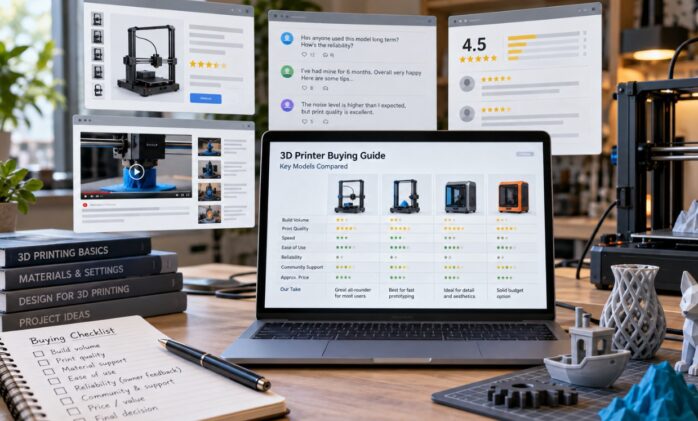
The central idea behind AValidReview is straightforward: instead of adding another individual opinion to the internet, make the existing opinions easier to understand.
That approach makes particular sense in 3D printing, where buyers often spend hours moving between product pages, Reddit threads, forums, YouTube videos and retailer reviews before making a decision.
AValidReview attempts to compress that research into an article that answers a more useful question than whether a reviewer liked a product: What do owners consistently experience after they actually start using it?
For a technology category where the difference between a great purchase and a frustrating one often appears only after the unboxing is finished, that is a question worth asking.